Overview
In a remote corner of New South Wales, archaeologists uncovered a burial site that rewrites our understanding of ancient human-animal relationships. This guide walks you through the discovery, analysis, and significance of a 950-year-old dingo laid to rest by the Barkindji people of the Darling River region. Unlike ordinary animal burials, this grave was revisited and fed with river mussels for half a millennium—a ritual that marks the first clear archaeological evidence of humans intentionally provisioning a grave anywhere on Earth. By following this step-by-step tutorial, you'll learn how scientists pieced together this story, what tools and methods they used, and why it matters for global archaeology.
Prerequisites
Background Knowledge
- Basic understanding of archaeological excavation techniques
- Familiarity with Australian prehistory (Aboriginal cultures and megafauna extinction timeline)
- Working knowledge of radiocarbon dating and stratigraphy
- No prior expertise in dingo archaeology required—what you need will be explained
Tools & Materials (for reference)
- Excavation trowels, brushes, and sieves
- GPS and total station for mapping
- Radiocarbon dating lab access
- Archaeobotanical and malacological (shell) analysis equipment
- Soil micromorphology microscope
Step-by-Step Instructions
Step 1: Site Discovery and Initial Survey
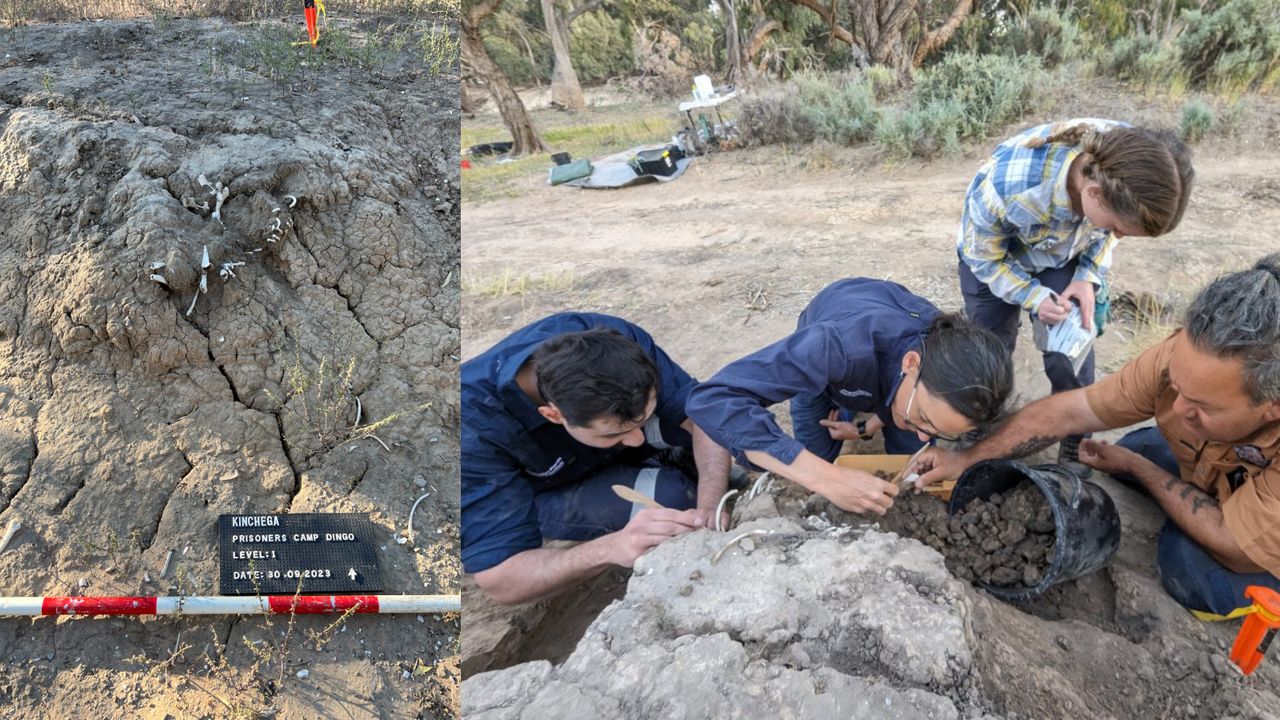
Begin by identifying a likely burial location. At the study site near the Darling River, archaeologists noted a small mound of beach shells—an unusual surface scatter in an inland environment. Using a systematic pedestrian survey, they recorded all visible artifacts. Look for clusters of freshwater mussel shells (genus Alathyria) that appear out of place, as they often signal human transport. Mark shell concentrations with GPS waypoints. For this site, the shell scatter led directly to a shallow burial pit.
Step 2: Excavation with Stratigraphic Control
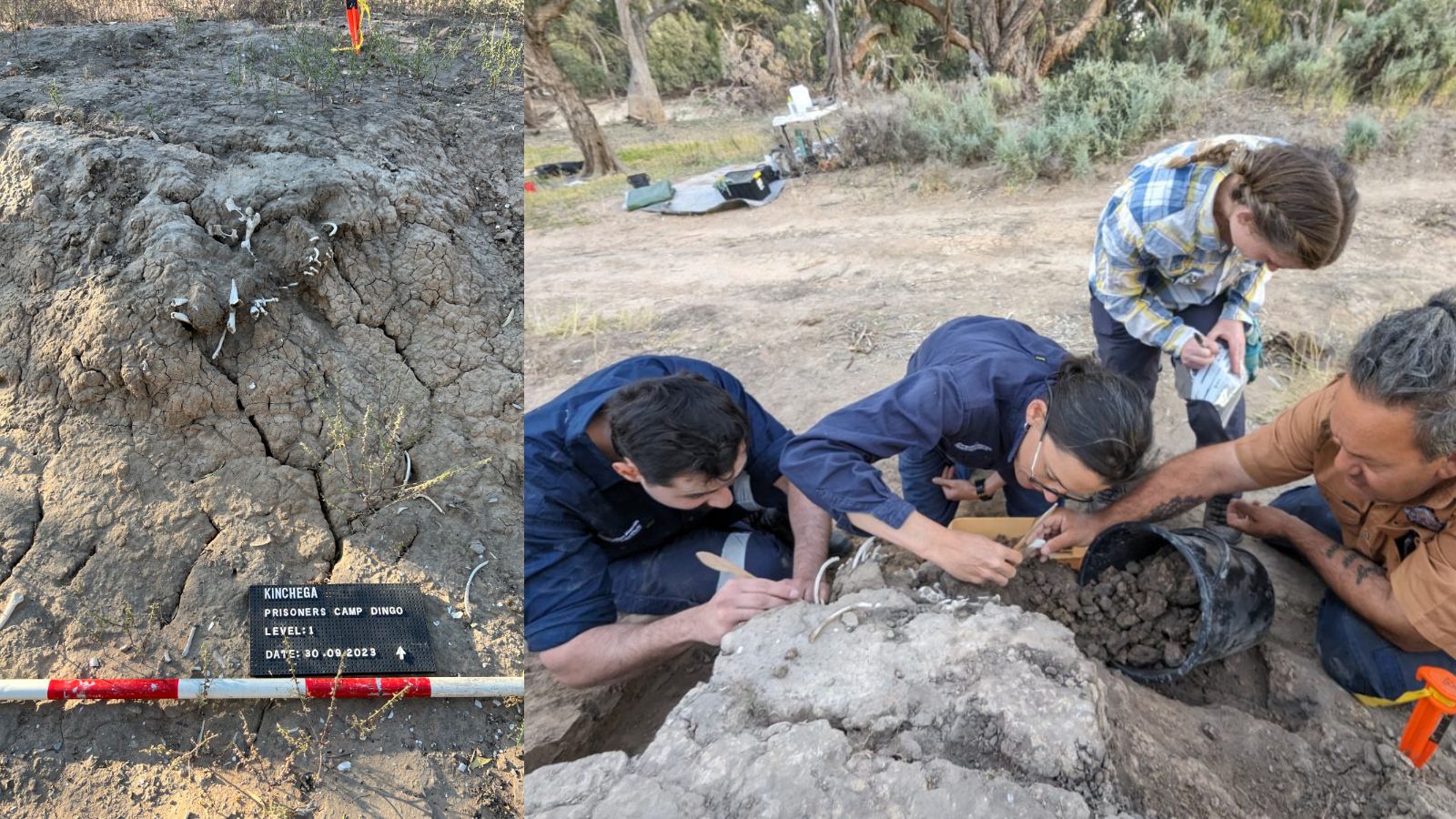
Set up a 1×1 meter grid over the shell concentration. Excavate in 5 cm spits (layers) to maintain vertical control. Use dental picks and brushes for fine work around any bones. The dingo skeleton was found in a tightly flexed position—legs drawn up to chest—indicating deliberate placement. Record soil color changes and note that the pit fill was darker than surrounding sediment, suggesting organic enrichment from the mussel remains. Collect bulk samples from each layer for later analysis.
Step 3: Radiocarbon Dating to Establish Chronology
Submit three types of samples for accelerator mass spectrometry (AMS) radiocarbon dating: collagen from a dingo bone, charcoal from the pit fill, and two mussel shells from different depths. Calibrate dates using the Southern Hemisphere calibration curve (SHCal20). Surprisingly, the dingo bone returned a date of ~950 BP (before present), while the mussel shells spanned a 500-year period—with the oldest shell matching the burial date and the youngest shell from the surface layer dating to ~450 BP. This staggered timeline proves that mussels were added over centuries, not all at once.
Step 4: Taphonomic and Shell Analysis
Examine the mussel shells for signs of human processing. Under a stereomicroscope, look for edge damage consistent with prying open while fresh (most shells showed this). Count the total number of individual specimens (NISP) and weigh them. At this site, more than 600 mussel valves were recovered, with a cumulative meat weight equivalent to hundreds of meals. Note that the shells are concentrated directly above the dingo's thoracic region—the heart area—suggesting intentional placement of offerings. Conduct soil micromorphology to confirm that shells were deposited in separate events (visible as micro-layers of shell hash alternating with sterile sediment).
Step 5: Contextualizing the Dingo's Life and Death
Analyze the dingo skeleton itself. Measure tooth wear to estimate age at death (~6–9 years, an old dingo). Check for cut marks or butchery marks—none were found, so the animal was not eaten. Check for pathologies that might indicate domestication (e.g., healed fractures from human care); no such signs appeared. This dingo was likely a semi-dependent wild animal that lived close to the Barkindji but was not fully tamed. Its burial treatment, however, was unique: the body was placed in a grave and then repeatedly fed with fresh mussels, perhaps on anniversaries.
Step 6: Interpreting the Ritual
Compare this burial to other known dingo burials across Australia. Most are simple, without grave goods or revisitation. In Aboriginal ethnography, dingoes are often linked to dreaming stories and are sometimes buried with ceremony, but no previous site shows repeated feeding. The closest parallels come from ancient Egyptian dog mummies or Mesoamerican canine sacrifices—but those involved mummification or mass sacrifice, not ongoing provisioning. This Barkindji practice represents a previously undocumented form of grave-feeding, possibly intended to sustain the dingo's spirit in the afterlife.
Common Mistakes
Mistaking Ritual Feeding for Accidental Accumulation
Some might assume the mussel shells were just food remains from a nearby campfire. However, the tight clustering over the dingo's chest, the lack of other food debris, and the chronological spread disprove that. Always use high-precision dating and spatial analysis to distinguish between natural or domestic refuse and intentional offerings.
Assuming Domestication
It's tempting to assume the dingo was a pet; but dingoes in Australia are not fully domesticated like dogs. The absence of domestic markers (e.g., shortened snouts, crowded teeth) confirms this was a cultural relationship, not a husbandry one. Avoid using the term 'pet burial' unless you have genetic or morphological evidence of domestication.
Overinterpreting the 500-Year Span
While evidence shows feeding continued for 500 years, it doesn't mean every generation returned. There could have been periodic gaps. The data only shows that the oldest and youngest mussels are 500 years apart; the frequency of visits is unknown. Use Bayesian modeling to estimate the most likely intervals.
Summary
This guide walked you through the archaeological investigation of a 950-year-old dingo burial on Barkindji Country. By following the steps—survey, excavation, dating, shell analysis, and cultural interpretation—you learned how scientists discovered the world's first clear evidence of humans ritually feeding a grave. The dingo was no pet; it was a respected creature whose spirit was nourished with freshwater mussels for half a millennium. This finding transforms our understanding of Aboriginal ritual complexity and human-animal bonds in deep time.
Further Resources
For the original scientific paper, search for '950-year-old dingo burial Barkindji mussels' in peer-reviewed journals. Explore Barkindji oral histories through local cultural centers (with permission). Compare this with canine burials from other continents using the Global Burial Database.